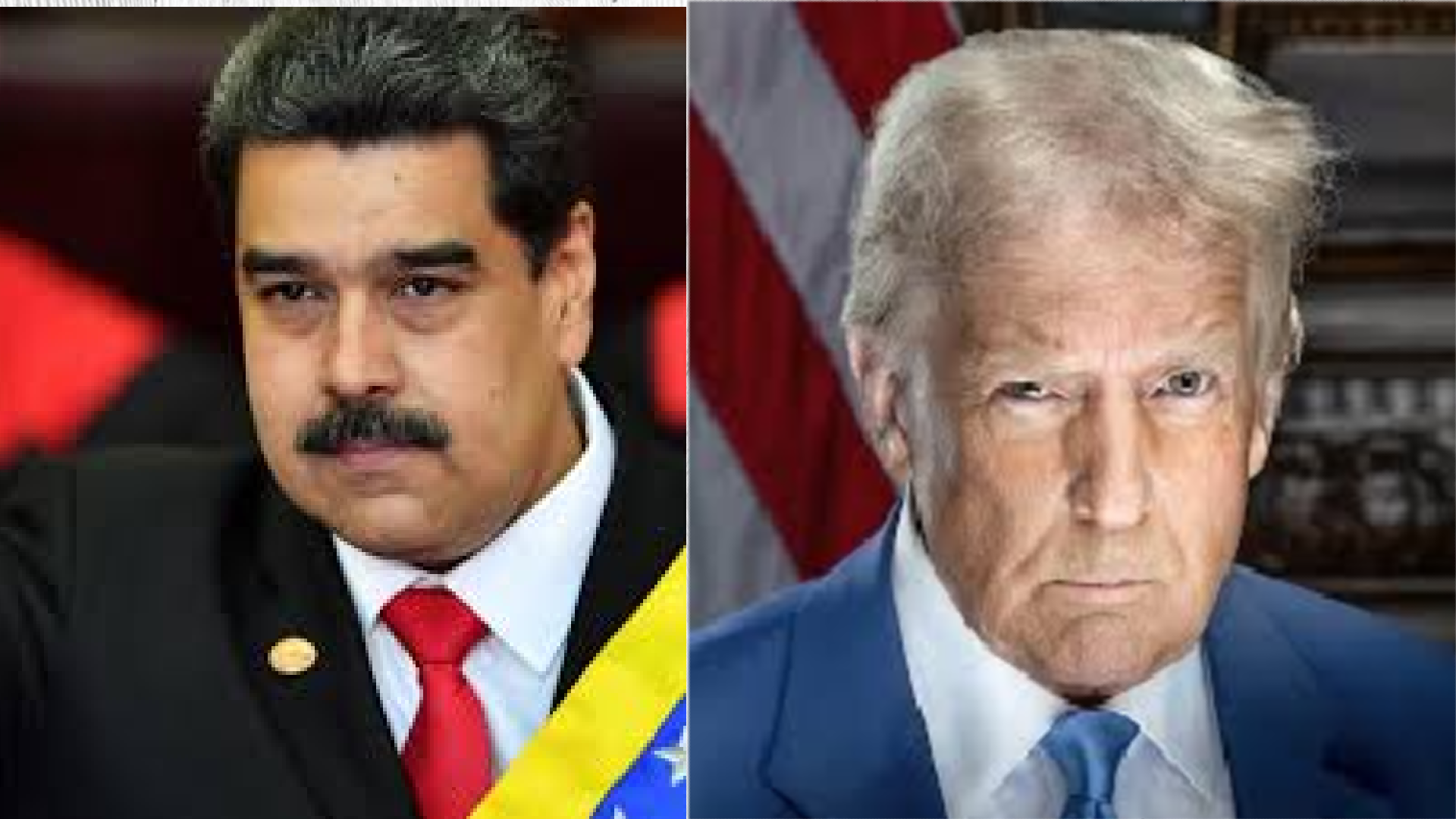
In early January 2026, the United States military carried out a major attack on Venezuela and captured President Nicolás Maduro and his wife, flying them to the United States where they are now facing legal charges, including alleged drug‑related offenses. The U.S. claims this action was meant to target criminal activity tied to the Venezuelan government.
However, this operation has sparked wide international debate. Many nations and international law experts say that military action against a sovereign country and removal of its leader without UN approval is a violation of international law, similar to what leaders condemned when Russia invaded Ukraine. In contrast, some other countries do support efforts to remove dictators.
As debate continues over the intent of the U.S. strike on Venezuela, whether Maduro’s removal was for the purposes of ceasing the traffic of illegal drugs into the U.S. or to take control of oil reserves within the region, christians across the world are faced with hard questions. How can they respond to geopolitical actions that claim to defend the oppressed, yet often carry complex motives?
The short reflections of one of our editorials provide a helpful starting point.
As Christians, how do we strike a balance?
On one hand, we believe in the sovereignty and dignity of every nation, a principle rooted in justice and respect. Also, Deuteronomy 32:8 reminds us that God is the one who allocates land and identity to nations.
On the other hand, we care deeply about the protection of vulnerable people suffering under oppression or injustice.
Christians and others are suffering unjustly around the world. Many remain voiceless and powerless, subjected to oppression and violence, often ignored by both global powers and their own governments.
In Luke 4:18, it reminds us that the mission of Christ includes liberation from oppression.
Jesus quoted Isaiah :
“He has sent me to proclaim freedom for the prisoners and recovery of sight for the blind, to set the oppressed free.”
But in a world driven by geopolitical interests, economic ambitions, and strategic agendas, these noble values are often manipulated. Military interventions can be masked as humanitarian, while silence in the face of injustice may be justified as respect for sovereignty.
As believers, we are not called to blind support or emotional reactions. We are called to discernment, truth, and prayerful reflection.
So the question is not only “who is right?” but “what is God’s will in the midst of this?”
This is not just a political issue, it’s a spiritual one. We must not be swept away by headlines or propaganda. Instead, we are called to reflect, pray, and seek the Lord’s guidance. May we discern when to speak, when to act, and always how to remain faithful witnesses of Christ in a complicated world.
Let us pray for wisdom to stand for justice without fueling war, defend the oppressed without compromising truth, and seek peace without endorsing hidden agendas.
Christ is Lord not only of the church — but also of the nations.
“He will judge the nations with justice… The Lord is a refuge for the oppressed, a stronghold in times of trouble.” — Psalm 9:8-9
Common Advises to Christians in Crisis
As the churches are facing the abuse of power during this period, Christians should be advised to remain focused on the truth.
God sees and judges the abuse of power. He holds rulers accountable, whether they are domestic or foreign. The Bible states in Isaiah 10:1: “Woe to those who make unjust laws, to those who issue oppressive decrees” and that: “He brings princes to naught and reduces the rulers of this world to nothing”. No empire should stand beyond God’s judgement. God is the supreme judge and ruler of the world, its creation.
God is near to the oppressed. Suffering believers are not abandoned even when oppression increases. The LORD is a refuge for the oppressed, a stronghold in times of trouble (Psalms 9:9) as the Bible states. The persecuted community is seen in its suffering. “Blessed are those who are persecuted because of righteousness, for theirs is the kingdom of heaven.” (Mathew 5:10). During the crisis, Christians should always remember that their suffering and faithfulness is seen and valued. Their hope is grounded in Christ, and Christ alone.
Christians are called to speak the Truth in Love and hold back the political blindness. The truth is part of resistance. We must speak the truth in love and humility, so we support those we serve. We must withhold fear and pain. Only the truth can set us free (John 8:32).
Christians’ Responsibilities during crisis
- Christians must remain rooted in Christ rather than political outcomes. The ultimate hope for believers rests in Christ and Christ alone (Philippians 3:20) paraphrased.
- Christians should continue to practice nonviolence ways to prevail community cohesion and internal peace. They must witness their faith in this period of crisis as stated in Romans 12:21: “Do not be overcome by evil but overcome evil with good”.
- Believers in Christ should prophetically speak with wisdom by naming injustice clearly, defending human dignity and advocating peace and fairness as it is stated in the Word of God in Proverbs 31:8 which says: “Speak up for those who cannot speak for themselves”. They must also be careful while weighing timing, safety and communal discernment (Mathew 10:16).
- Believers should strengthen the church community by devoting themselves to fellowship… and sharing with anyone who had need. When external pressure increases, Scripture points inward in the light of the primitive church of believers in the book of Acts 2:42-45. The believers must encourage each other for mutual aid, reinforce pastoral care for trauma, sustain resilience teachings and hope.
The Call to the Global Church
For the Christians outside Venezuela, the Bible calls us to remember those in prison as if you were together with them (Hebrews 13:3). This means that we support them with prayer that is informed and truthful, advocacy for peace and humanitarian access, support for Venezuelan churches not political agendas.
Theological insights
Theologically, we must understand that God is sovereign over nations, power struggles harm the vulnerable, the church’s calling is faithfulness, truth, compassion, and hope; political empires rise and fall but Christ’s kingdom remains as it is revealed by the Word of God in Revelation 11:15.
Pascal Ndayikeza is one of the Authors on The Baptist Chronicle's editorial team.
The views expressed in this opinion article are those of the author
and do not necessarily reflect the official position of The Baptist Chronicle.
Read also:
Two babies exchanged by mistake: A case worthy of King Solomon shakes a Burundian hospital