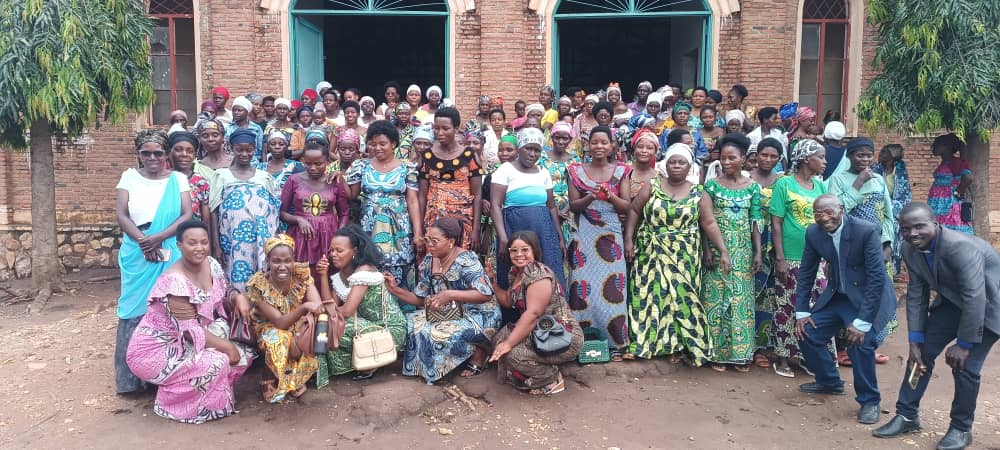
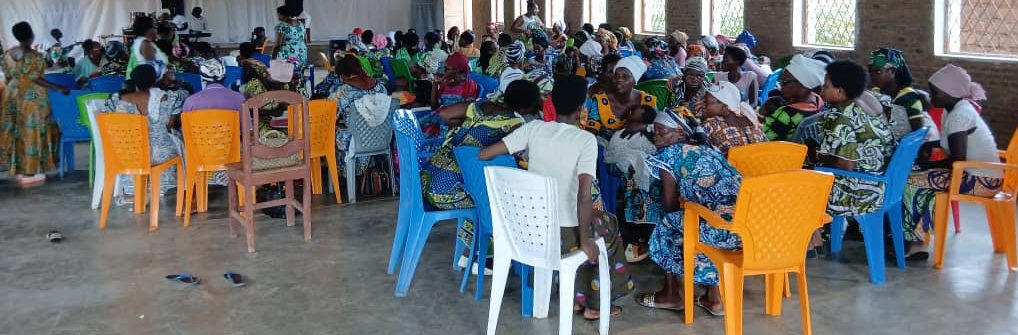
As the month of March is widely recognized around the world for celebrating women’s rights and contributions to society, women from several Free Baptist churches gathered yesterday March 14th, 2026 at Ndava Free Baptist Church to reflect on the role of women in Christian ministry. Participants came from churches in Bujumbura and Cibitoke, including Gihosha, Tenga, Ndava (the host church), Kansega, and Butaramuka.
The gathering aimed to celebrate and highlight the contributions of women in family development, in church life and ministry.
During the event, several topics were discussed, including the biblical understanding of women’s roles in family and ministry. Participants also had the opportunity to identify and share examples of women who have served as role models in Christian ministry.
After group discussions, they noticed that in many congregations across Burundi, women are deeply involved in singing, prayer ministries, evangelism, teaching children, organizing church activities, and supporting missionary work. Their dedication has played an important role in the growth and stability of local churches.
RELATED : Burundi to Host First-Ever Eastern Africa Baptist Women’s Conference
However, when it comes to occupying leadership positions such as pastoral roles, questions often arise and opinions among believers remain divided.
ALSO READ :
- Burundi’s Prime Minister warns religious denominations, cites possible church closures over legal non-compliance
-
President Ndayishimiye Hails Coincidence of Ramadan and Lent as a Historic Moment of National Unity
Female Leadership in Ministry: A Growing Challenge for Churches in Burundi
Burundi’s history has shaped how leadership roles are perceived. For many years, women were often overlooked in positions of authority in society. And this also affected the ministry.
Although national policies today guarantee that women occupy at least 30 percent of positions in public administration, politics, and the justice system, observers believe that greater inclusion is still needed in many sectors, including Christian ministry leadership.
For some church leaders, pastoral leadership carries responsibilities that may be difficult to reconcile with the social and family expectations placed on women.
They say that in many Burundian families, mothers traditionally play a central role in raising and educating children. When ministry responsibilities require long periods away from home, the impact on family life can become more visible.
According to a Pastor in Bujumbura, pastoral ministry often requires sacrifices that can deeply affect family life. He explained that pastors sometimes make urgent decisions for the sake of the church without consulting their spouses, especially when responding to ministry needs or missionary opportunities.
“In some situations, male pastors may spend more than two weeks away from home while participating in evangelistic campaigns or mission activities. Despite their absence, their households often continue functioning normally.” Says Rev. Dieudonné Irambona questionning how such a situation might affect a woman who already has children and who is traditionally responsible for many household duties.
He added:
“In our context,” he noted, “women already carry many responsibilities at home. Adding the full burden of pastoral leadership may create additional challenges for family stability.”
Some other church leaders believe that women who are unmarried or widowed may be in a better position to assume pastoral responsibilities. According to them, Without the traditional structure of a household led by a husband, these women often manage their homes independently, make economic decisions, and organize their time freely. For this reason, they may have greater flexibility to dedicate themselves fully to ministry leadership.
However, One pastor who preferred to remain anonymous expressed reservations about the idea of women occupying pastoral leadership positions, even in cases where the woman is a widow.
Five young women out of 8 interviewed by The Baptist Chronicle shared similar experiences. They explained that pastoral ministry often consumes a large portion of their parents’ time, leaving little space for family interaction.
“While church members frequently call upon pastors for guidance, prayer, or counseling, the children themselves may feel that their needs receive less attention.” – Says Gisele Nishimwe, an inhabitant of Bujumbura expressing that she sometimes feels deprived of the attention she would normally expect from her father.
She feels sorry for the children whose mother is a pastor, saying if the pastor is a woman, this absence may be felt even more strongly.
ALSO READ :
- Opinion : What if the Churches in Burundi Took the Nation’s Psychological Wounds Seriously?
- In Burundi, the bible has become a luxury
- Obituary: Burundian Rev. Dr. Eleazar Ziherambere died at 75 years old
In contrast, some women serving actively in church ministries believe that leadership opportunities should be based primarily on calling and spiritual gifts rather than gender.
One woman involved in ministry explained that women have already been playing significant roles in church life for many years.
Emelyne, 43 years old, says :
“Women are already doing a lot in the church,” she said. “We teach children, we organize prayer meetings, we lead worship, and we participate in evangelism. In many congregations, women are among the most active members.”
According to her, the discussion about women in leadership should focus on recognizing the gifts that God has given to individuals.
“If God gives someone the ability to serve and lead, the church should be open to recognizing that calling,” she added. “What matters most is faithfulness to God and commitment to the mission of the church.”
Baptist Theology and Women Pastors in the African Context
Within Baptist theology, the question of women serving as pastors continues to be discussed in many parts of the world. One of the defining principles of Baptist life is the autonomy of the local church, meaning that each congregation has the freedom to determine its own leadership structure.
In many African Baptist communities, including several churches in Burundi, the dominant theological perspective tends to emphasize male pastoral leadership. Supporters of this view often refer to passages such as First Epistle to Timothy and Epistle to Titus, which describe the qualifications for church leaders in terms that many interpret as referring to men.
At the same time, Baptist churches widely acknowledge the indispensable role that women play in the life and mission of the church. Across Africa, women are often among the most active members of congregations, leading prayer movements, organizing evangelistic outreach, supporting missionary initiatives, and nurturing the spiritual growth of younger generations.
Other Christians interpret biblical passages differently and emphasize examples of women who played important roles in the early church, such as Phoebe in Epistle to the Romans and Priscilla in Book of Acts. These examples lead some believers to argue that spiritual calling and gifting, rather than gender, should determine eligibility for leadership roles in ministry.
As churches across Africa continue to grow and adapt to changing social realities, discussions about women in pastoral leadership remain ongoing. For many believers, the challenge is to remain faithful to biblical teachings while recognizing the valuable contributions that women continue to make in advancing the mission of the church.
This question of women in ministry leadership is not simply theoretical. It touches on theology, culture, family life, and the lived experiences of believers.
While opinions may differ, the church must continue to value and support the ministry of women who faithfully serve God and their communities.
As churches in Burundi continue to reflect on these questions, the conversation about women’s leadership in ministry is likely to remain an important part of the broader discussion about the future of the church.
Opinion : What if the Churches in Burundi Took the Nation’s Psychological Wounds Seriously?
Who will represent 7,000 unreached groups with no access to the gospel before the throne?