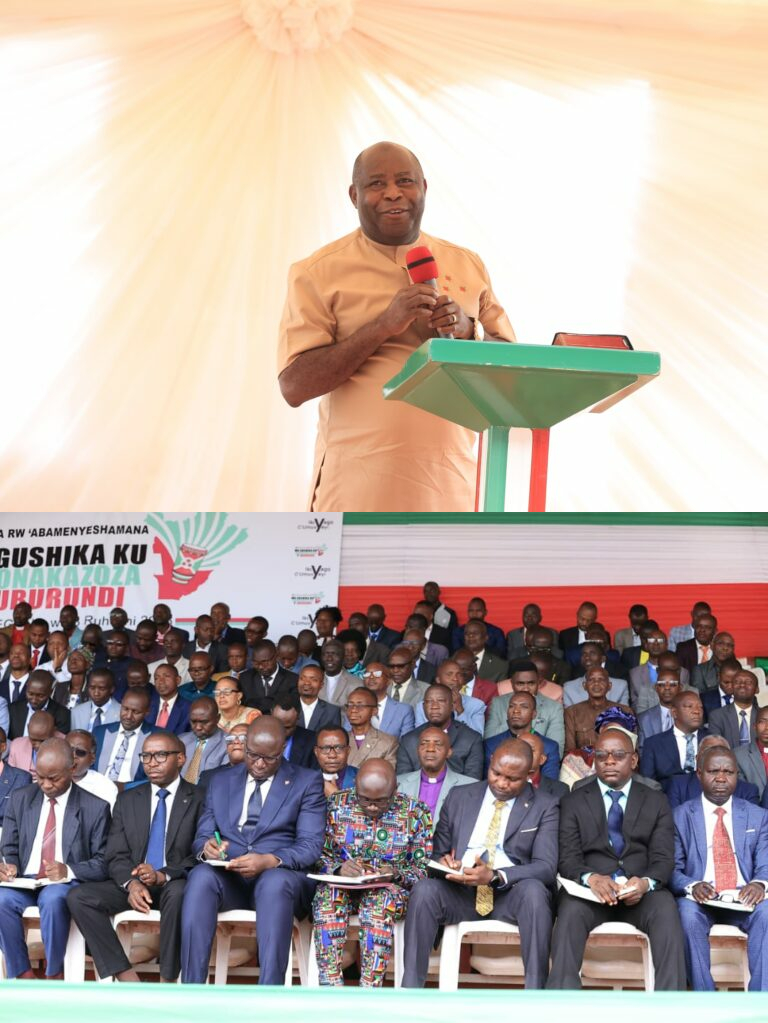
Burundian President Evariste Ndayishimiye and religious leaders said they are considering establishing the country’s largest shelter for street children as a broader initiative aimed at ending the escalating street children crisis.
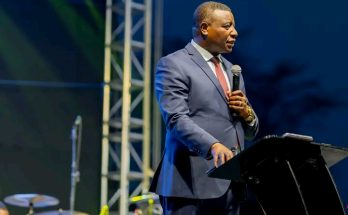
Speaking at an event on June 3 in the country’s political capital, Gitega, President Ndayishimiye called for empathy towards the children and urged religious leaders to work closely with the government to solve the issue.
“I want us to truly do God’s work. Let us take the children of our country off the streets and understand that street children are children from our own families. Let us recognize that we are one family. Those children who are wandering and suffering in the streets are children of this nation. They are our children,” he argued, calling on church leaders to explain the project within their congregations and mobilize support from parish and local religious leaders.
The meeting was attended by church leaders from various denominations across the country to discuss their role in achieving Burundi’s Vision 2040–2060 under the theme “The Role of Religious Leaders in Achieving Burundi’s Vision.”
The meeting focused on the contribution of churches to national development, including efforts to address the growing number of children living in street situations.
Ndayishimiye further stressed that denominations play a significant role and called for collective efforts to resolve the issue.
“It is possible for this country to have no one sleeping on the streets. This is a goal I want us to achieve together with the churches,” he said.
To ensure its effective implementation, the Head of State noted that caregivers would be given monthly salaries, saying the move is part of a broader government initiative to end the crisis.
RELATED :President Ndayishimiye Hails Coincidence of Ramadan and Lent as a Historic Moment of National Unity
According to the President, the center will provide children with a family environment in which they will receive effective education and gain skills, including self-reliance.
“If we stop this cycle from continuing, then we will truly have done God’s work,” he told church leaders. “This is what I want us to achieve so that the spirit of generosity, solidarity, and compassion may begin to flourish among us once again.”
Past Government Efforts to Solve the Issue
As of 2025, the number of street children was at least 70,000, according to the government. The rights groups have long criticized the low budget allocated to child protection initiatives, saying insufficient funding has worsened the situation.
In 2024, police carried out periodic search-and-seizure operations, collecting more than 300 children and placing them in rehabilitation centers in the former Cankuzo Province. However, some children escaped from the centers, reporting insufficient food and harsh living conditions.
Churches Welcome Initiative
Religious leaders welcomed the initiative and expressed their willingness to support it.
Speaking on behalf of church leaders, Apostle Isidore Mbayahaga suggested opening a dedicated bank account for savings rather than making it a unilateral task.
“We were discussing among ourselves the assignment you gave us to present this idea to our churches, and we feel that this could make the process more complicated. Instead, we would kindly ask you to provide us with a bank account through which we can make our contributions, so that all churches that receive this message can respond accordingly,” he said.
Mbayahaga also argued that the proposed monthly contribution of BIF 10,000 per church is too small, suggesting a higher amount.
“If we genuinely wish to support the Head of State in his noble initiatives, the amount of 10,000 francs is too small,” he said.
Another pastor echoed the suggestion, adding that the creation of a bank account would increase contributions.
“As for me, I believe that if a bank account is opened, we will all be able to make sufficient contributions so that these activities can be carried out successfully and under good conditions,” he said.
In response, President Ndayishimiye instructed the Strategic Studies Office for Development at the Presidency, in collaboration with the Ministry of Finance, to create a blocked bank account. He added that the account will remain blocked for one year before the funds are assessed and construction begins.
“All the studies will have been completed, including those related to the site where the center will be built. We will then be able to announce that we have started working as one family,” he reassured.
The President also emphasized that the diversity of churches in Burundi is a strength rather than an obstacle.
“I have already told you this: the fact that there are many churches in my country does not bother me because churches do not engage in politics. They all come together in God.”
Burundi counts more than 900 legal denominations across the country according to the Ministry of Interior. Some of them already work in charitable actions, supporting orphans, widows, and the most vulnerable people.
The government and churches’ initiative aligns with God’s calling to physically and spiritually support the neighbors. In Matthew 18:5, Jesus made it clear that “Whoever welcomes one such child in my name welcomes me,” while the Psalmist urged individuals to “defend the weak and the fatherless; uphold the cause of the poor and the oppressed.” ( Psalm 82:3)
The book of James emphasizes that “Religion that God our Father accepts as pure and faultless is this: to look after orphans and widows in their distress and to keep oneself from being polluted by the world.” (James 1:27)
ALSO READ :
Burundi to Examine Religious Teachings and Church Practices in New National Investigation
Discover more from THE BAPTIST CHRONICLE
Subscribe to get the latest posts sent to your email.