Baptist church leaders are calling for collaboration, shared leadership, and holistic ministry throughout the global Church, while full implementation in African countries, including Burundi, remains difficult.
Theological divisions, financial constraints, and institutional barriers are among the leading challenges.
Over the past few weeks, Baptist leaders at the Baptist World Alliance Annual Conference adopted the “Integral and Polycentric Mission” resolution as Guiding Missional Principles, calling for collective efforts toward its implementation to fulfill God’s mission.
According to the Baptist World Alliance, the Integral and Polycentric Mission resolution affirms that God’s mission remains central to the life and witness of the Church and identifies integral and polycentric mission as guiding principles for Baptist engagement in the world.
It added that the resolution calls the global Baptist family to embrace a holistic Gospel witness through collaborative partnerships that recognize the diverse gifts, voices, and leadership present throughout the worldwide Church.
The conference was held from July 6–10 at Tyndale University in Toronto, Canada, and was attended by Baptist leaders from more than 60 countries, including pastors, theologians, students, ministry leaders, and representatives of Baptist churches from around the world.
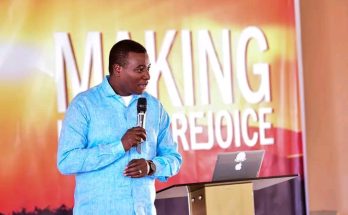
Pastor Dieudonné Irambona, Vice Representative of the Free Baptist Church in Burundi, praised the resolution as promoting values that lead to complete human transformation, calling on the Church to embrace it.
“This resolution emphasizes the value of the local and natural resources entrusted to us. These resources are vital for advancing the Kingdom of God and fulfilling His mission in our communities” , he told The Baptist Chronicle in an exclusive interview.
“This mission promotes the flourishing of the whole human person. Every stakeholder is invited to demonstrate God’s love, revealed in Jesus Christ, who is all in all and for all,” he said, adding that the vision would enable African church leaders to better understand their communities and collaborate with local stakeholders in building the Church.
Unresolved Challenges
The Baptist Church in Burundi has reportedly recognized dozens of independent churches including the Free Baptist Church since its arrival in the 1900s. Disagreements over certain church beliefs are among the main reasons that have led to fragmentation inc
Pastor Irambona argued some pastors have declined to collaborate with pastors who separated from them to establish their own churches.
The theology researcher said the implementation of the resolution remains far from being realized despite its significance. He cited challenges including a lack of mutual collaboration, fragmentation, limited funding, dependence on external financial support, and misunderstandings over certain beliefs.
Financial constraints present a major challenge. According to Pastor Irambona, widespread poverty affects many church members, limiting their ability to support the ministry of local congregations.
“Many families are struggling because of the economic crisis, making it difficult for them to support the work of the Church. At the same time, there are still many underserved and unreached communities across Burundi,” he said.
Another significant obstacle, he said, is the heavy dependence on external financial support, warning that overreliance could obstruct the advancement of the Gospel.
“While outside assistance can be valuable, overreliance on it may weaken local ownership of ministry and distract church leaders from their primary mission of serving their communities and advancing the Gospel,” he explained.“
Calls for Unity to Address the Issue
To address the issue, Pastor Irambona said overcoming the current challenges would require greater unity among Baptist churches, stronger theological education, increased local participation in mission, and a renewed commitment to holistic ministry.
Pastor Irambona urged Burundian Baptist leaders to express their commitment to the resolution and focus on collaboration and leadership emerging from different regions of the global Church rather than from a single cultural or geographical center.
“It opens doors for us to use our God-given gifts and strengthens our identity in Christ,” he added.
He further emphasized the need for viable collaboration, arguing that it requires a profound change in mindset centered on God’s purposes.
“Working together as Baptist churches is possible, but it is difficult. People need to understand God’s purpose, as illustrated in Genesis 11:9, where God confused the people’s languages so they would spread throughout the earth.”
He encouraged African church leaders to strengthen partnerships, value local contributions, and adopt indigenous strategies to fulfill Christ’s Great Commission more effectively.
To conclude, Pastor Irambona expressed hope that young leaders would resolve the issue.
“I believe the new generation will overcome this spirit of division so that Baptist churches can work together,” he said.
Discover more from THE BAPTIST CHRONICLE
Subscribe to get the latest posts sent to your email.