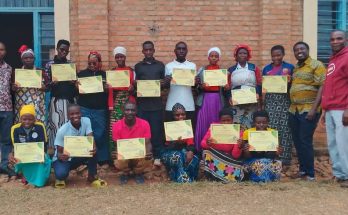
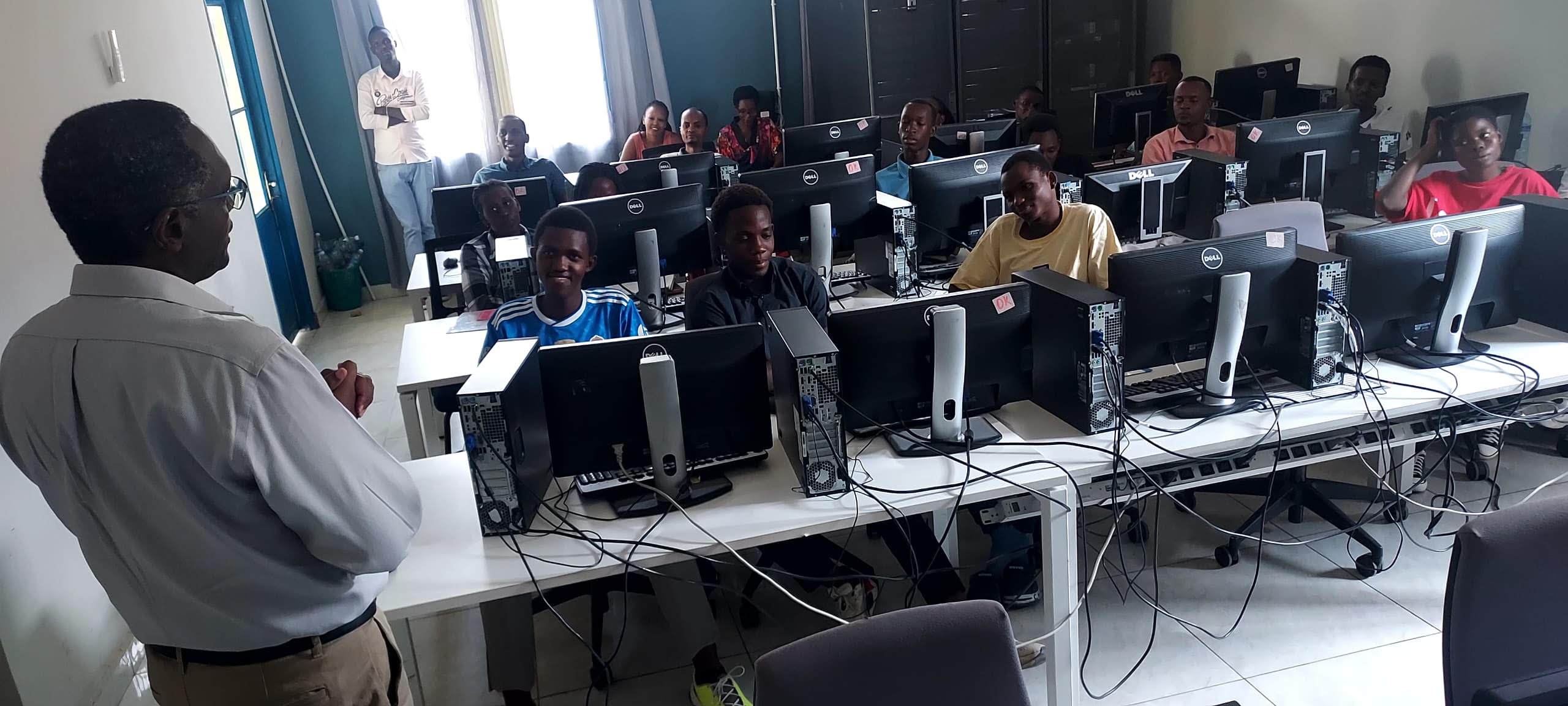
The Eglise Vivante of Jabe is relying on young people to give new momentum to its evangelism efforts. As part of this initiative, 23 young people have been trained through the MC2 program (Multiplying Churches and Communities) to equip them with evangelism skills to proclaim the Gospel and make disciples.
In partnership with Campus Crusade for Christ Burundi, the training was held each Saturday from September 12 to October 3 in Bujumbura, Burundi’s economic capital, and brought together young people from the church.
Freddy Nkurunziza, head of the Evangelism Department at the Eglise Vivante of Jabe, said the program aims to reach a large number of people and contribute to the expansion of the Kingdom of God.
“The purpose of this activity is connected to the vision of the church to reach as many people as possible by proclaiming the Gospel to them, in accordance with Matthew 28:19–20, which says: ‘Go therefore and make disciples of all nations, baptizing them in the name of the Father, the Son and the Holy Spirit.’ That’s why we are carrying out this activity to proclaim the Gospel,” he explained.
Nkurunziza said the young people were selected for the training after participating for some time in evangelistic activities organized through a series of crusades called Maranatha, which had already been held twice.
According to him, their field experience showed the need to better equip the young people before sending them out to proclaim the Gospel.
“We realized that the young people we take to these crusades need to acquire sufficient knowledge to be able to proclaim the Gospel of Christ and share what they have learned. We want to give them the tools they need to testify when they are out in the field,” he said.
Beyond the crusades, Nkurunziza said the church plans to work with the young people to proclaim the Gospel in queues at bus parking areas in downtown Bujumbura, as well as through Bible groups in secondary schools.
He emphasized that young people are well suited to this work because of their interest in evangelism and their commitment to sharing God’s Word with their peers.
“That is why we have chosen to work with young people, who also have time available. When we look for adults, they are often busy with their jobs and many other responsibilities. Young people generally have more time. When we need them and set a program, they are available,” he said.
Félix Niyungeko, from the Global Church Movement department at Campus Crusade for Christ Burundi, said the organization regularly provides similar training to churches and religious leaders.
“Churches provide us with people whom we train in evangelism, with the goal of multiplying Christ’s disciples and helping churches grow. We help churches learn how to proclaim the Gospel and how to establish groups that can multiply until they give rise to other churches,” he said.
Niyungeko said the training covers evangelism methods as well as how to disciple new believers who have accepted Christ as Lord and Savior.
“This includes helping them grow in the Word of God, become part of discipleship groups and help other believers join these groups, so that the church can multiply or existing communities can be strengthened,” he explained.
Young People: A Major Asset for Evangelism
For Nkurunziza, young people play an important role in the development of the church because of their energy, availability and wide range of connections within their communities.
“Young people still have a lot of strength. They also have the opportunity to reach more people than adults, particularly their classmates and friends. In many situations, it is young people who have the opportunity to reach large numbers of people and share the Gospel with them,” he said.
Nkurunziza also believes that evangelism led by young people can be effective without requiring significant financial resources.
“We believe they can reach many people because they have friends at school, in their neighborhoods and in other settings. Young people do not necessarily require large resources or expensive programs. When they are given direction, they can go and proclaim the Gospel,” he said.
Niyungeko echoed these views, saying that young people’s availability and energy are important to the spiritual development of the church.
He added that young people represent the future of the church, saying that their involvement in church activities helps them take responsibility, prepare for leadership and contribute to shaping the church of tomorrow.
Participants Appreciate the Training
Gisèle Kwizera, one of the participants, said the training is useful both for people who have already accepted Jesus Christ and for those who have not yet done so. She said the training has significantly improved the way she shares the Gospel.
“They show us how to proclaim the Gospel, how to approach people and which words to use when sharing the message with those who have not yet accepted the Lord Jesus as King and Savior in their lives,” she said.
Axel Nduwayo, another participant, said he appreciated the training, which he considers a way of contributing to the building up of Christ’s Church.
“We realized that many people don’t know the truth. Many people think that being saved simply means entering a church that believes in Jesus Christ. But truly knowing Jesus also means following His mission,” he said.
He added that living according to God’s mission includes understanding why Jesus Christ came into the world.
“Jesus Christ came into the world to proclaim the Gospel, the Good News of the Word of God. That is the work for which He came.”, he said
Kessy Shalom Mutoni also said she appreciated the training. She particularly highlighted the fact that the lessons are provided in materials that participants can read on their own and that they are based on the Word of God contained in the Bible.
“We learned about God, human beings and the Holy Spirit. We also studied the difference between a person who directs themselves and someone who allows themselves to be directed by God, as well as the case of a person who has Jesus in their heart but does not allow Him to lead their life. The training also addresses how a Christian can progress in their faith and grow in salvation,” she said.
Salvator Nibasumba, another young participant, said the training broadened his understanding of evangelism.
“We learned that testimony can be presented in three ways: explaining what we were like before accepting Jesus, sharing where we are today in our walk with Jesus, and explaining how we intend to continue walking with Him in the future,” he said.
Since the beginning of the training, participants have also had the opportunity to put what they learned into practice.
In total, 34 people were reached with the Gospel message through practical evangelistic activities carried out by the participants. Of these, 13 committed their lives to Jesus Christ.
Discover more from THE BAPTIST CHRONICLE
Subscribe to get the latest posts sent to your email.